Bringing field data closer to the farm
I’m building remote monitoring equipment that can send environmental readings from a field to a server over the mobile network. A working prototype now sends data reliably; I’m also testing a solar-powered soil-moisture setup. The next steps are to finish the new circuit-board design and prepare the equipment for longer outdoor trials.
A practical question
How can we keep track of conditions in a field without having to visit a measuring point every time? I started this project to explore one answer: a small, remotely operated device that collects environmental data and sends it to a server.
The idea brings together electronics, mobile communications and software—but the goal is straightforward: make it easier to receive measurements from a place that is not connected to a normal internet line. A farmer or researcher could then check incoming data remotely. This is a development project, not a finished commercial product, and the field trials will show how well it works in practice.
From a prototype to a working connection
The first prototype is built around a small computer on a circuit board. It reads data and uses NB‑IoT—a mobile-network service designed for small amounts of information from devices—to send it over the internet. I have tested the connection with a SIM7080 modem, and the device is now reliably sending data to my server.
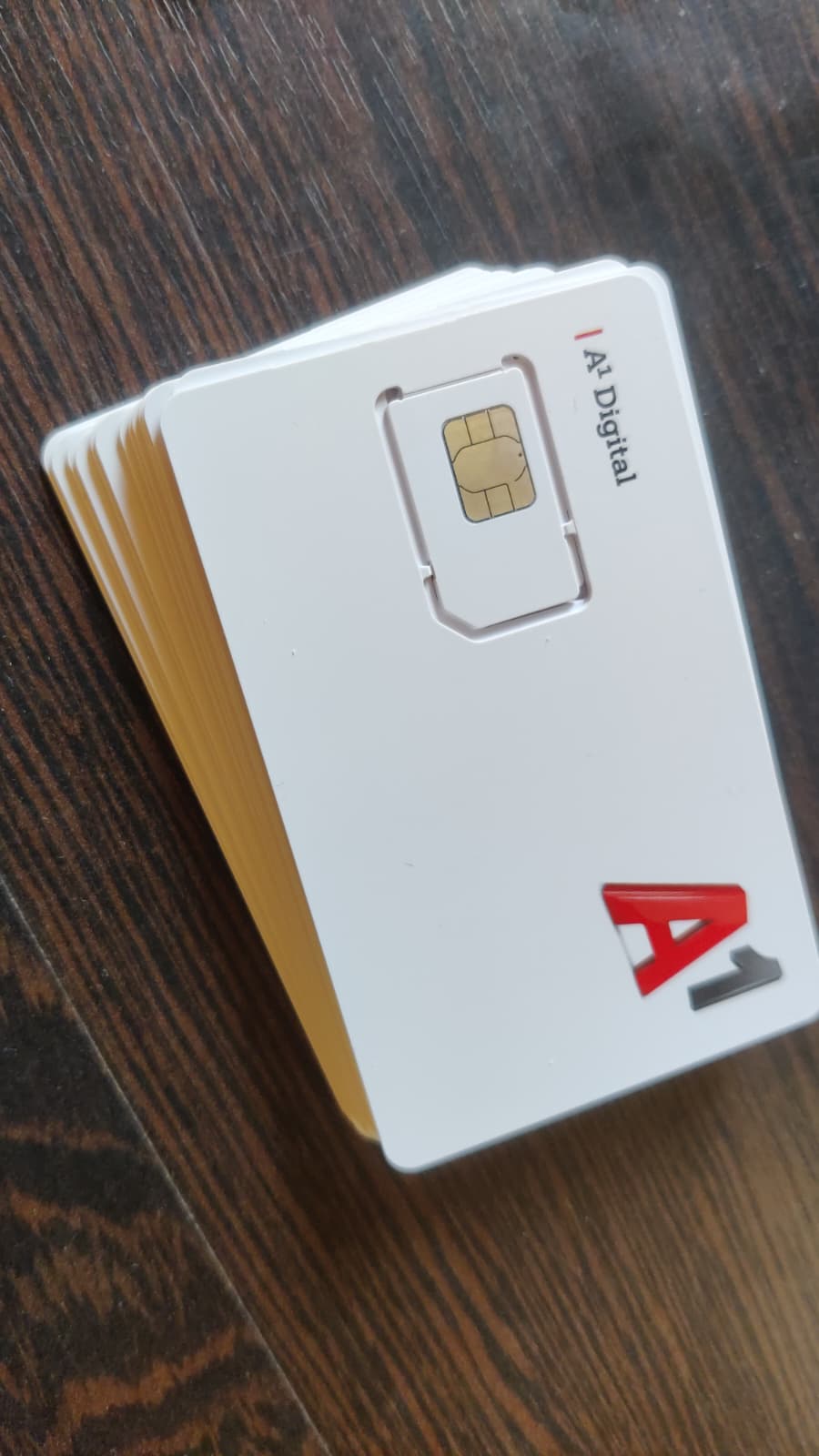
The SIM cards provide the mobile connection used for sending the prototype’s data.
Getting to that point took more than assembling parts. I adapted the prototype as I learned what the electronics needed, including adding a component to control power. The experience has been a reminder that a useful field device must be designed for real operating conditions, not just made to work once on a desk.
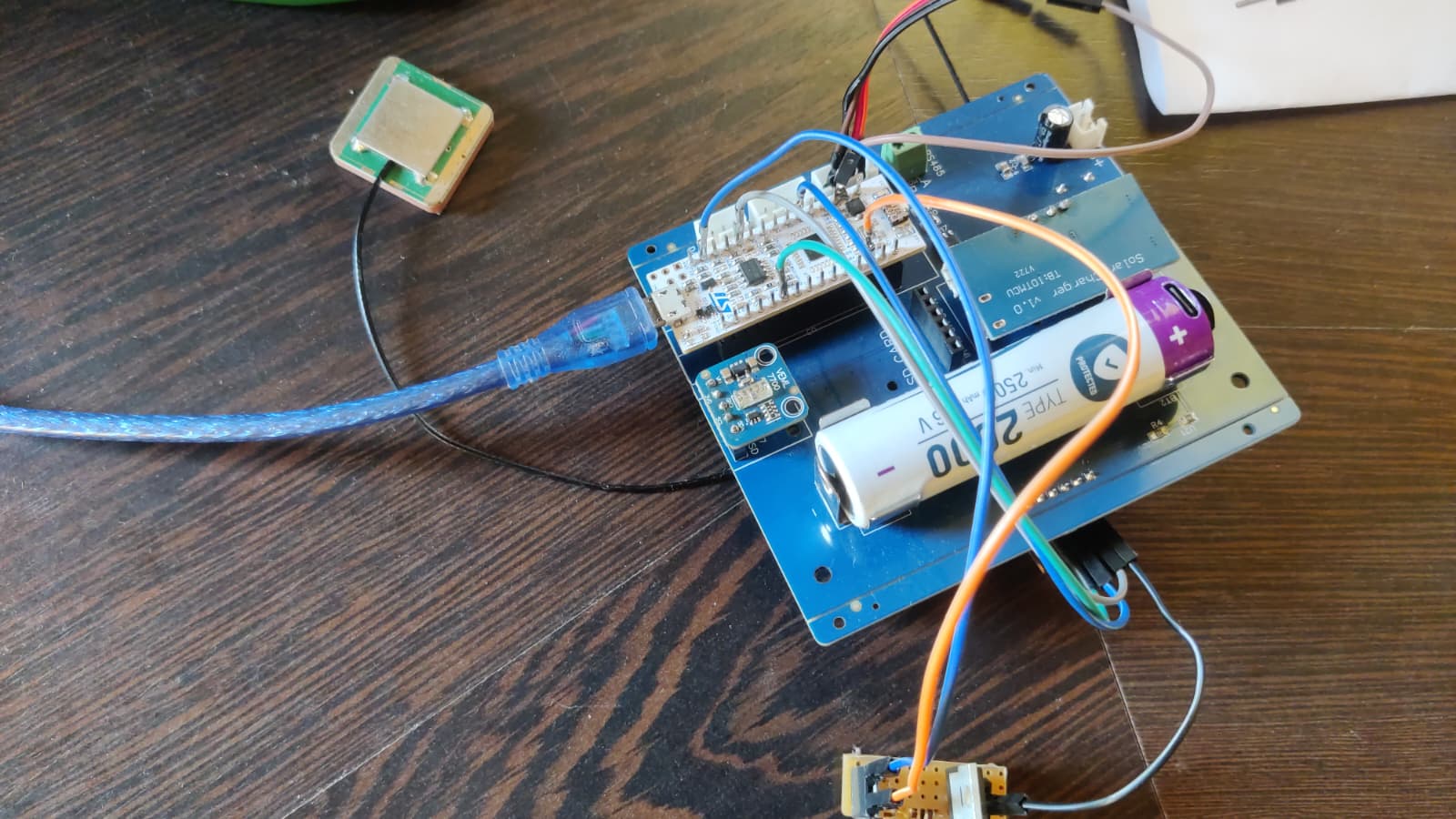
This is the working prototype in its current, very much work-in-progress form. It may look untidy, but it reliably sends data to my server.
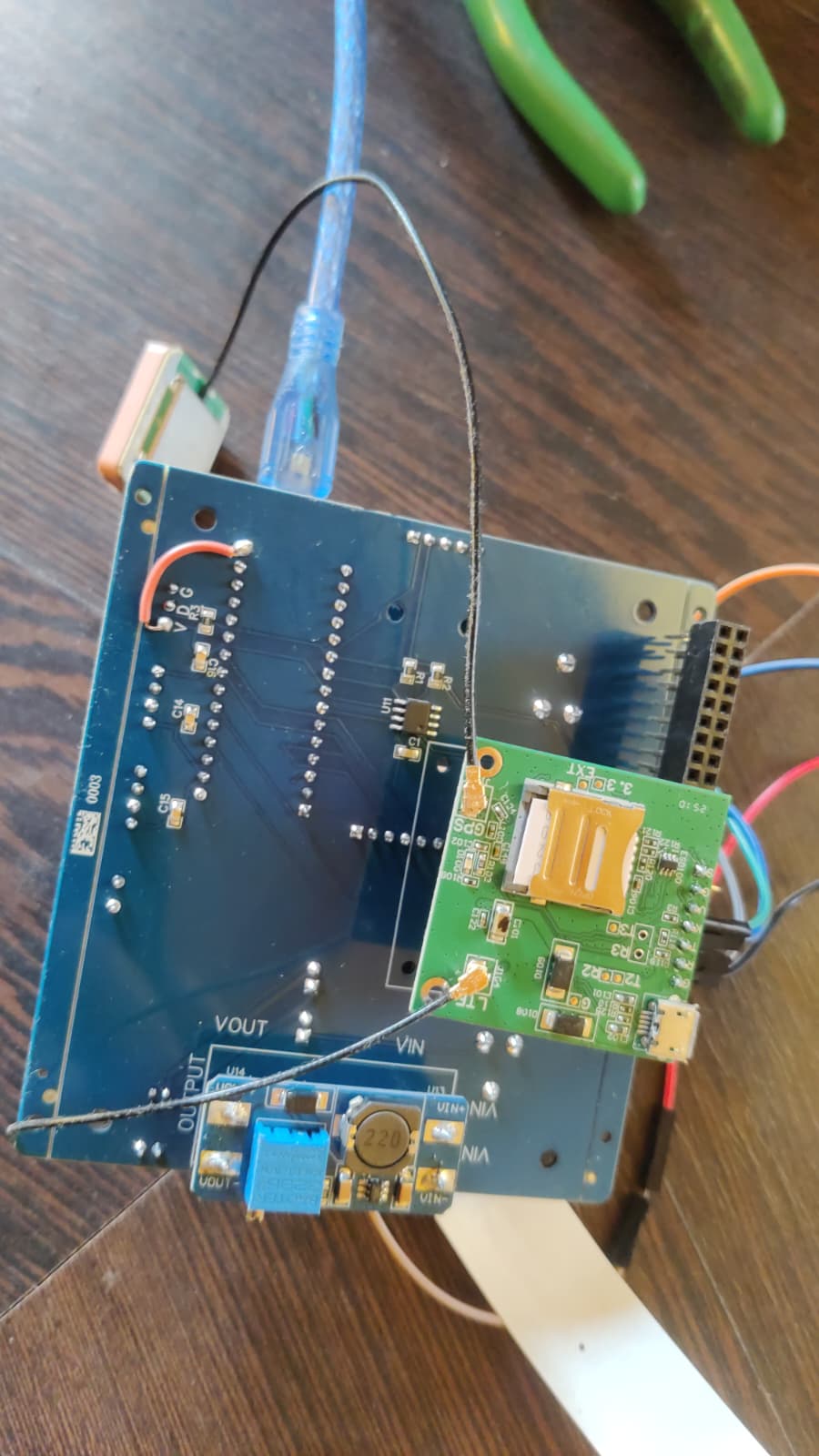
The close-up shows the added boards and wiring used while bringing the prototype together.
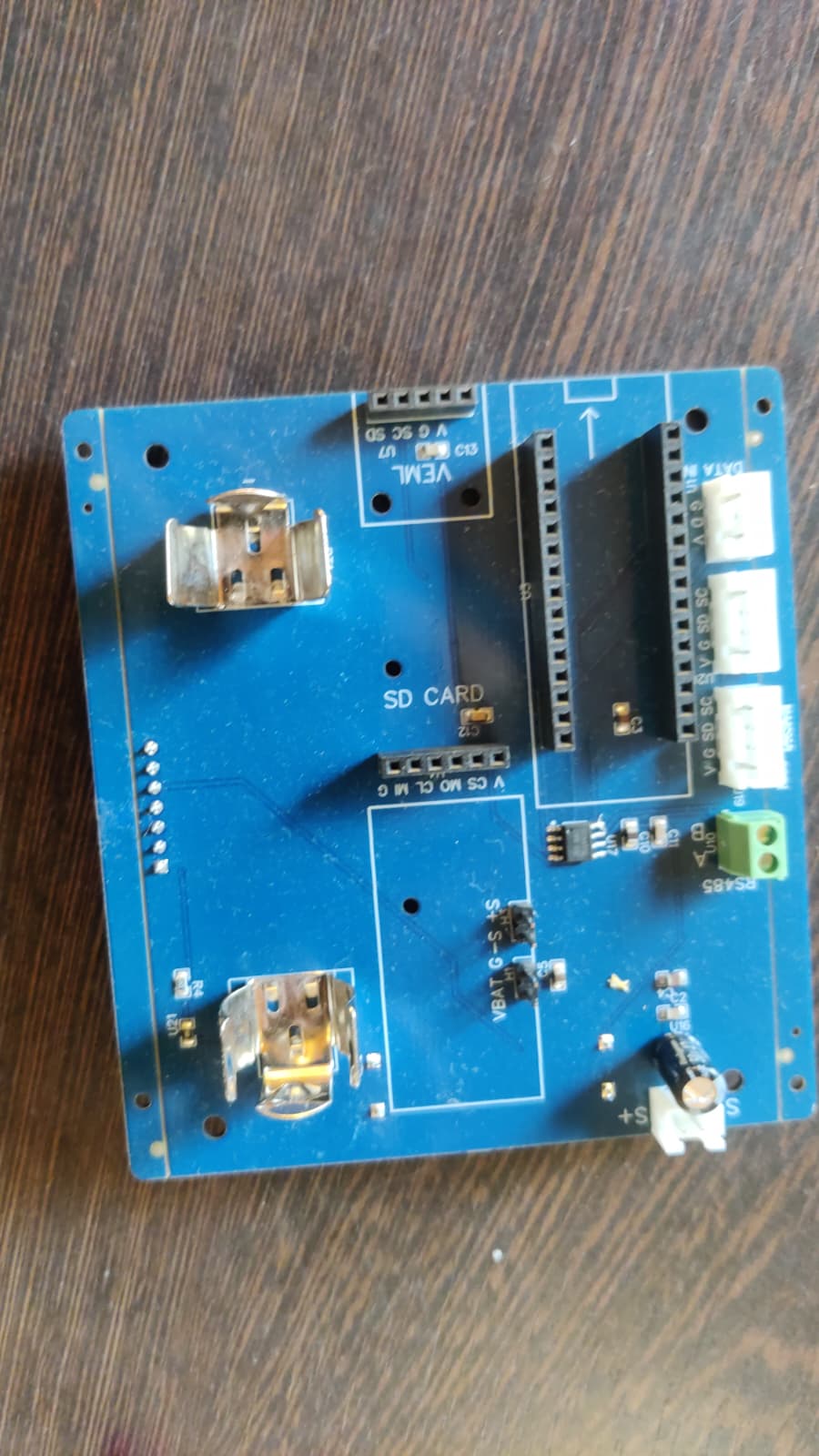
Alongside the assembled test setup, I have been developing and testing the circuit boards themselves.
I also run the receiving side of the project: a server application that accepts the device’s data. The server is hosted in a data centre and runs alongside the services behind my website, email, monitoring and backups. Building both ends has helped me understand the whole journey—from a measurement in the field to information arriving at a service I operate.
How the software connects the pieces
Behind the circuit boards, several pieces of software work together: the device collects and saves readings, a mobile modem carries them to my server, and the server stores them and makes them available to the dashboard. These diagrams show the NB‑IoT prototype’s software path. The Arduino/RS‑485 soil-moisture setup described below is a separate trial.
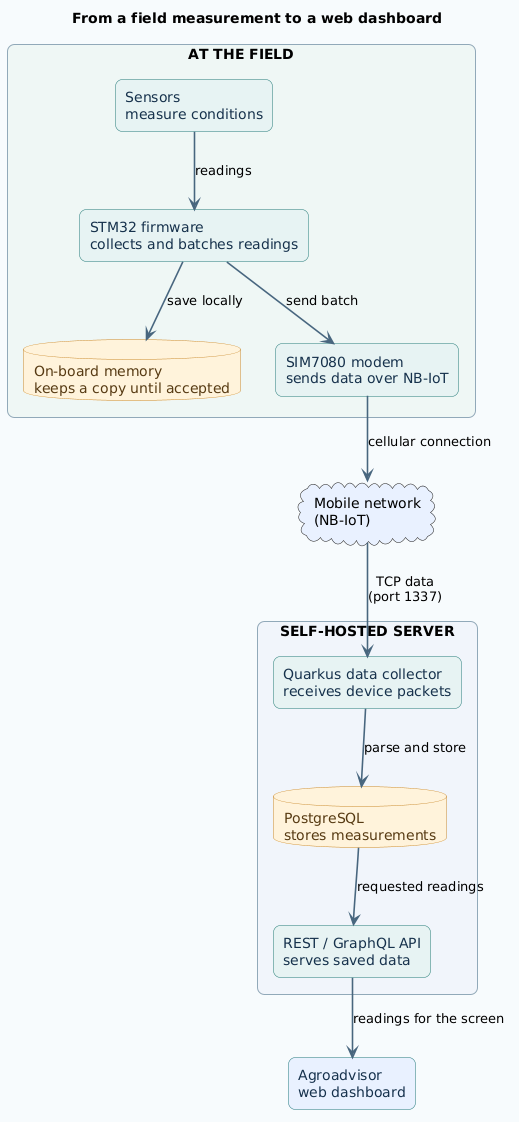
The data path from the field device to the web dashboard. The device keeps a local copy until the server confirms receipt.
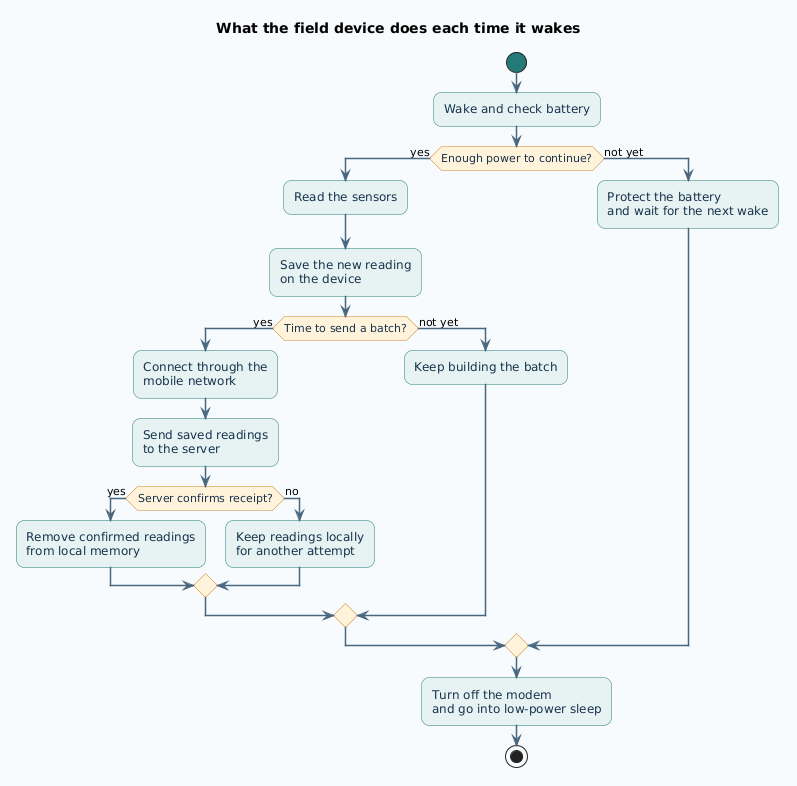
Each time it wakes, the device measures and saves data. It sends a batch when it is due, then removes the saved readings only after a successful confirmation.
A separate soil-moisture trial
Alongside the NB‑IoT device, I’m working with a soil-moisture sensor that communicates over RS‑485, a wired method commonly used to connect equipment over longer distances. This setup is solar-powered and is being tested over a longer period. I’m developing the software driver that lets a small Arduino-based controller read the sensor, and its data is being sent to agroadvisor.kraftsoftware.at.
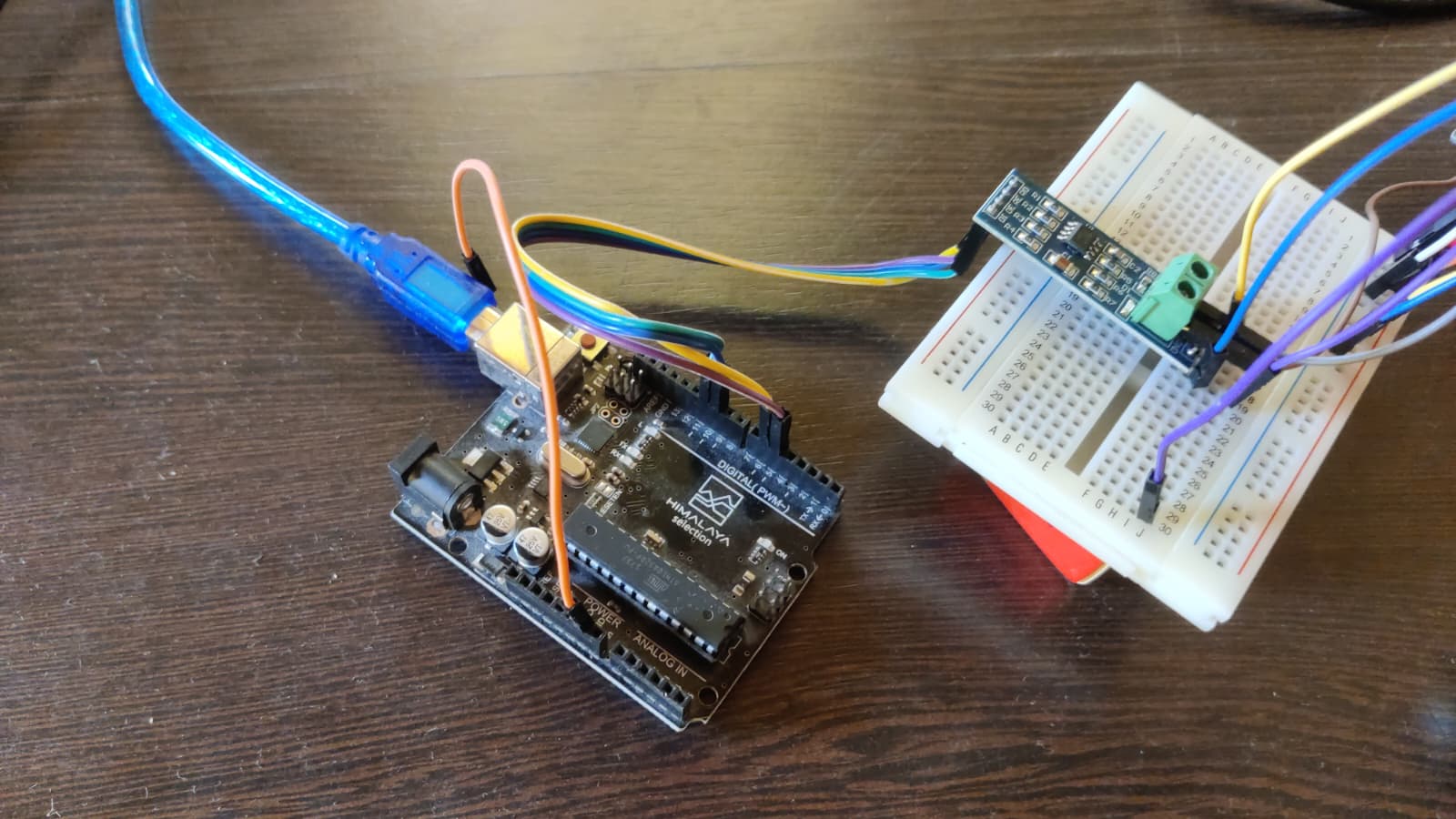
This is the Arduino setup I use while writing and testing the driver for the soil-moisture sensor. The sensor communicates over RS‑485; this bench setup lets me work on that connection before relying on it in the longer test.
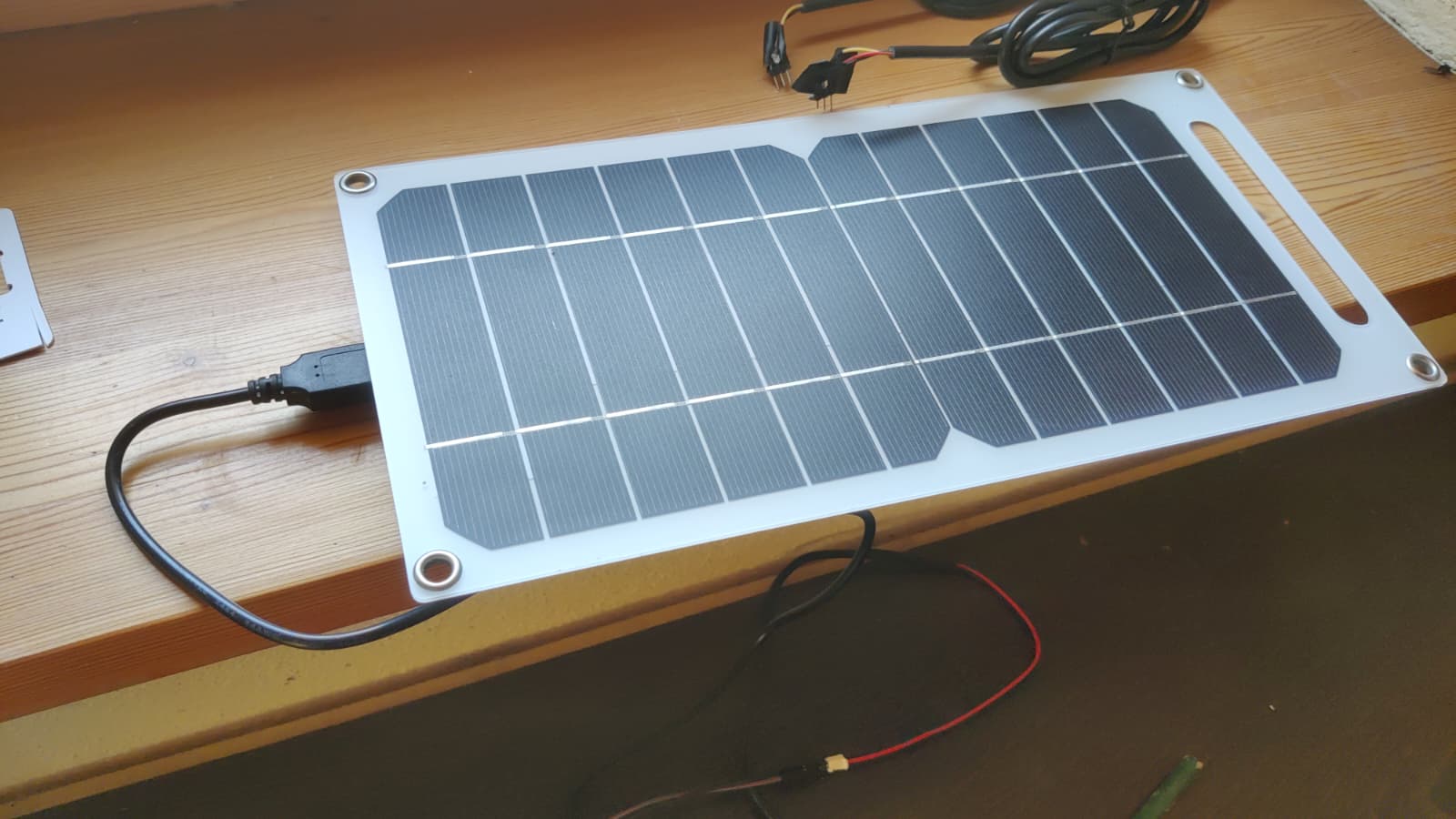
Solar power is part of the setup being tested for remote operation.
The two parts of the project explore different ways of collecting and moving field data. The NB‑IoT prototype focuses on sending measurements wirelessly over a mobile network; the soil-moisture trial is checking how a sensor, a wired connection and solar power can work together over time.
What comes next
A second version of the NB‑IoT circuit board is now in development. It is being designed with surface-mounted components—the small parts soldered directly onto a circuit board—so the electronics can be made in a more compact, integrated form. The current board design is shown below; it is a design-stage image, not a completed field unit.
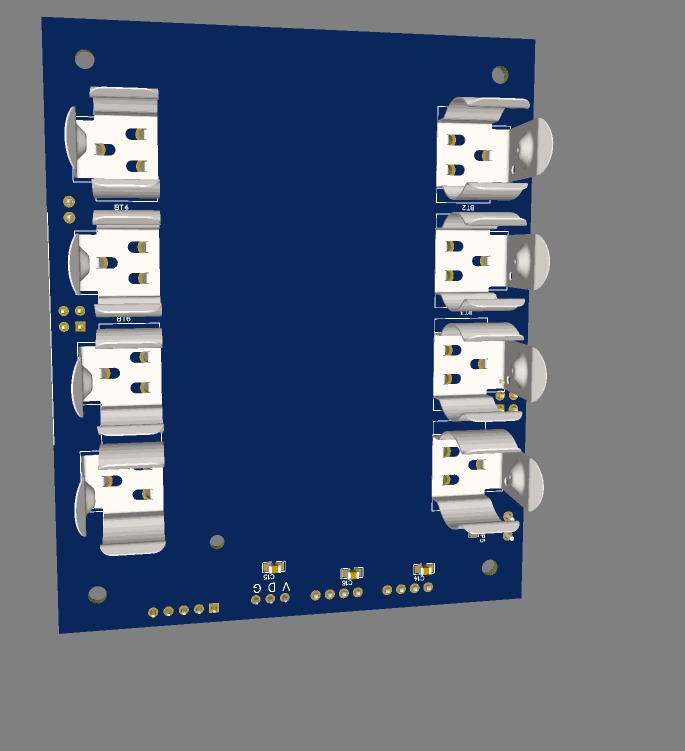
The next board revision is being developed; this image shows the design rather than a finished product.
The next milestone is to complete the board, finish the sensor-reading software and move the equipment into an IP68-rated enclosure for outdoor testing. The enclosure and field trial are still ahead. Those tests will help answer the practical questions that matter most: how consistently data arrives, how well the equipment manages its power, and how it stands up to real field conditions.
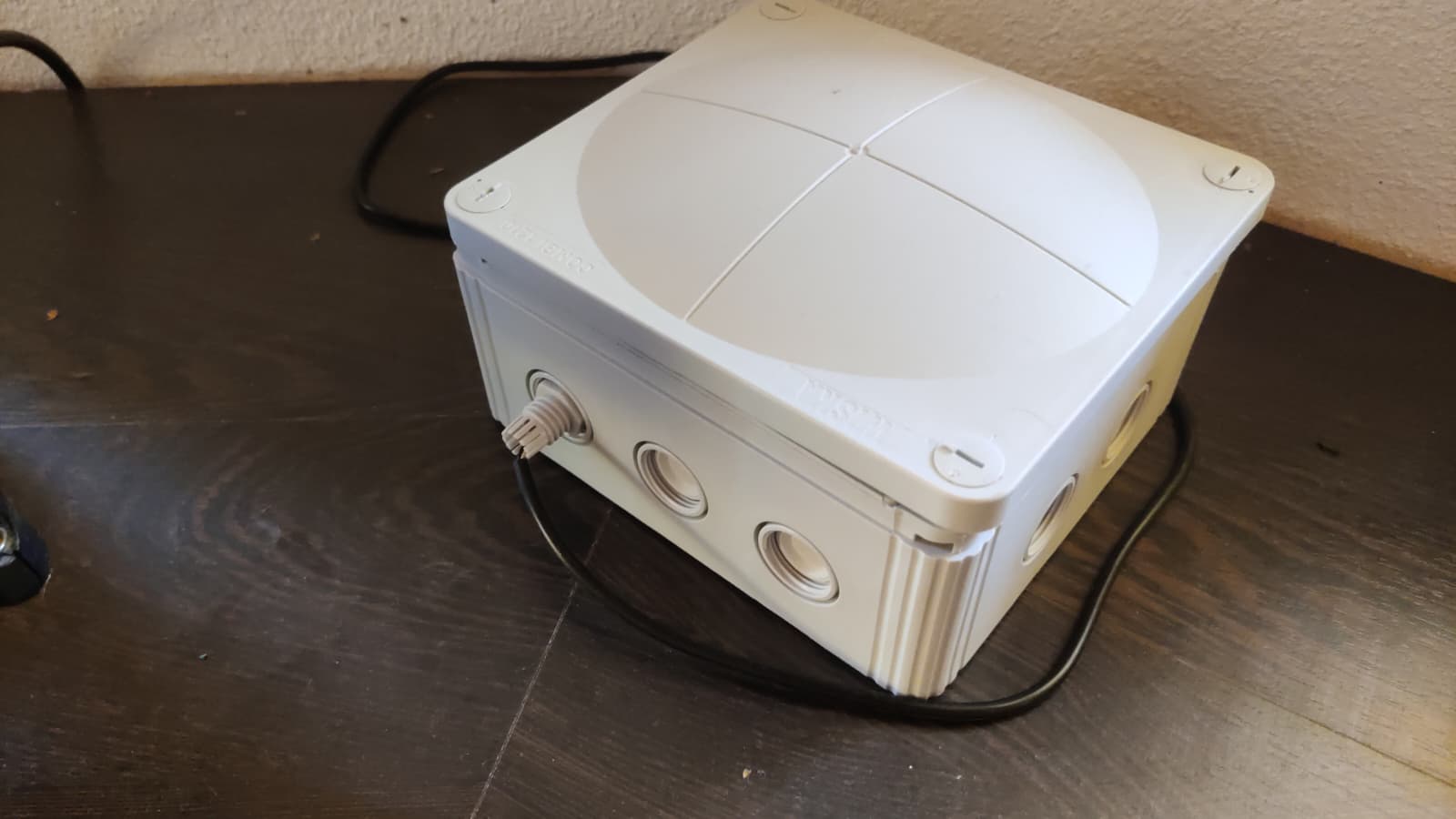
The enclosure pictured is part of the preparation for outdoor testing; the complete IP68 field setup has not yet been validated.